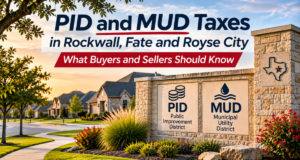
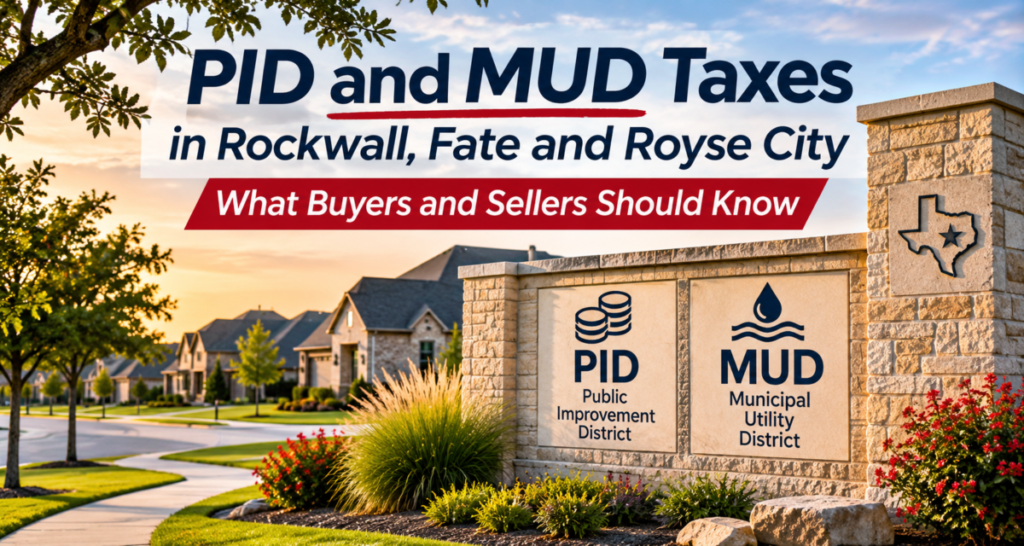
Quick answer: PID and MUD taxes are two different things. A PID (Public Improvement District) is a special assessment set up by a city or county to pay for improvements in a development, such as streets, drainage, landscaping or amenities. It usually lasts for a set period until the related debt is repaid. A MUD (Municipal Utility District) is a separate taxing district that funds water, sewer and drainage through its own tax rate. Both add to your yearly cost of owning a home, Texas law requires sellers to disclose them, and the school district homestead exemption generally doesn’t reduce them.
Rockwall County has grown quickly, especially in Fate, Royse City and newer communities around Rockwall and Heath. Some of those neighborhoods were developed with help from special districts, and that’s when buyers start seeing three letters on their tax estimates: PID or MUD.
PID and MUD taxes aren’t automatically a negative. They’re often how a new community gets finished streets, trails, parks and infrastructure from day one. They do change the math on your payment, though, so it pays to understand them whether you’re buying or selling.
What Is a PID?
A Public Improvement District is created by a city or county under the Texas Local Government Code. Property owners inside the district pay an assessment that helps fund improvements such as roads, drainage, utilities, landscaping or amenities.
- It’s an assessment, not a tax rate. Each property is typically assigned its share of the cost.
- It usually has an end date. Many PIDs run for decades, often until the bonds behind them are repaid.
- Some allow early payoff. The district’s service and assessment plan explains whether a lump-sum payoff is available.
- It’s often collected with property taxes, though billing can vary.
Cities that use PIDs typically publish each district’s service and assessment plan. The City of Fate, for example, posts its PID plans on its website.
What Is a MUD?
A Municipal Utility District is its own local government, created under Texas law to provide water, sewer and drainage service, often in areas outside a city’s existing utility system. MUDs typically fund those services through bonds and a tax rate, similar to a school district or city.
- It’s a tax rate applied to your property’s taxable value.
- It typically appears on your property tax bill.
- Rates vary by district and can change over time.
- The school district homestead exemption generally doesn’t apply to MUD taxes.
PID and MUD Taxes at a Glance
| PID | MUD | |
|---|---|---|
| Created by | A city or county | A separate district created under state law |
| Pays for | Neighborhood improvements (streets, drainage, amenities) | Water, sewer and drainage |
| How it’s charged | Assessment per property | Tax rate on taxable value |
| Has an end date? | Usually, once the debt is repaid | Ongoing, though the rate can change |
| Early payoff? | Sometimes | Not typically |
| Reduced by school homestead exemption? | Generally no | Generally no |
How PIDs and MUDs Affect Your Monthly Payment
If your lender escrows taxes, PID and MUD taxes are typically included in your monthly payment. When you compare an older Rockwall neighborhood with a newer community in Fate or Royse City, compare the total yearly cost of ownership, not just the price:
- Price and interest rate
- plus the total property tax rate (including any MUD)
- plus any PID assessment
- plus HOA dues
- plus homeowners insurance
With PID and MUD taxes included, sometimes a lower-priced new build costs about the same each month as an older home without special districts. Sometimes it’s still the better value thanks to amenities, newer construction and lower upkeep. Running the numbers both ways is the only way to know.
Can a PID or MUD Affect Loan Approval?
Lenders generally include property taxes and assessments in your monthly housing payment when they calculate what you qualify for, so these charges can affect your approved price range. Ask your lender for an estimate based on the specific property’s tax rate and assessment rather than a general average.
What Texas Sellers Need to Disclose
Texas law requires sellers to give buyers written notice when a property is located in a PID or a MUD. The notices describe the assessment or the district’s taxing authority so buyers understand the obligation before they’re committed.
If you’re selling in a newer community with PID and MUD taxes, have this information ready before you list. It keeps the transaction moving and builds buyer confidence. A good listing agent will help you gather the current details and present them clearly. See how we help sellers in Fate, Royse City and Rockwall.
Do These Districts Lower Home Values?
Not necessarily. Buyers in newer communities are often paying for amenities, newer construction and location, and special districts are part of how those communities were built. What matters is that the total yearly cost is clear and competitive with similar homes nearby.
How to Look Up PID and MUD Details for a Property
- Rockwall Central Appraisal District: the property record shows the taxing units that apply.
- City websites: cities with PIDs typically publish service and assessment plans.
- Seller disclosure notices: ask your agent to request them early, before you make an offer.
Buying or Selling in a Newer Community? Let’s Run the Numbers.
Missy Wadham and Jason Miller have more than 20 years of experience helping buyers and sellers across Rockwall, Fate, Royse City, Heath and nearby cities. We’ll help you understand the true monthly cost of any home you’re considering, and if you’re selling, we’ll help your home compete with nearby new construction.
Related reading: the Rockwall County homestead exemption guide and new construction homes with Texas Born Team.
Browse Fate homes for sale · Browse Royse City homes for sale · Browse Rockwall homes for sale · Get your free home value
Frequently Asked Questions
What is a PID tax in Texas?
A PID (Public Improvement District) assessment is a charge on properties inside a district created by a city or county to help pay for improvements such as streets, drainage, landscaping or amenities. It usually lasts until the related debt is repaid.
What is the difference between a PID and a MUD?
A PID is an assessment for neighborhood improvements that usually ends once its debt is repaid. A MUD is a separate taxing district that funds water, sewer and drainage through an ongoing tax rate on your property tax bill.
Can I pay off a PID early?
Some PIDs allow a lump-sum payoff. Check the district’s service and assessment plan or contact the city that manages it.
Does the homestead exemption reduce PID or MUD charges?
Generally not. The school district homestead exemption typically doesn’t lower PID assessments or MUD taxes.
Do Texas sellers have to disclose a PID or MUD?
Yes. Texas law requires sellers to give buyers written notice when a property is in a PID or MUD.
Are there PIDs or MUDs in Fate and Royse City?
Some communities in the area include special districts and others don’t. Check the specific property’s record with the Rockwall Central Appraisal District or the city, or ask your agent before making an offer.
This article is general information, not tax, legal or lending advice. Confirm the details for any specific property with the appraisal district, the city and your lender.